
In Search of a Way Forward: From Opportunities to Necessities – Political and Social Participation of Internally Displaced Persons in Georgia
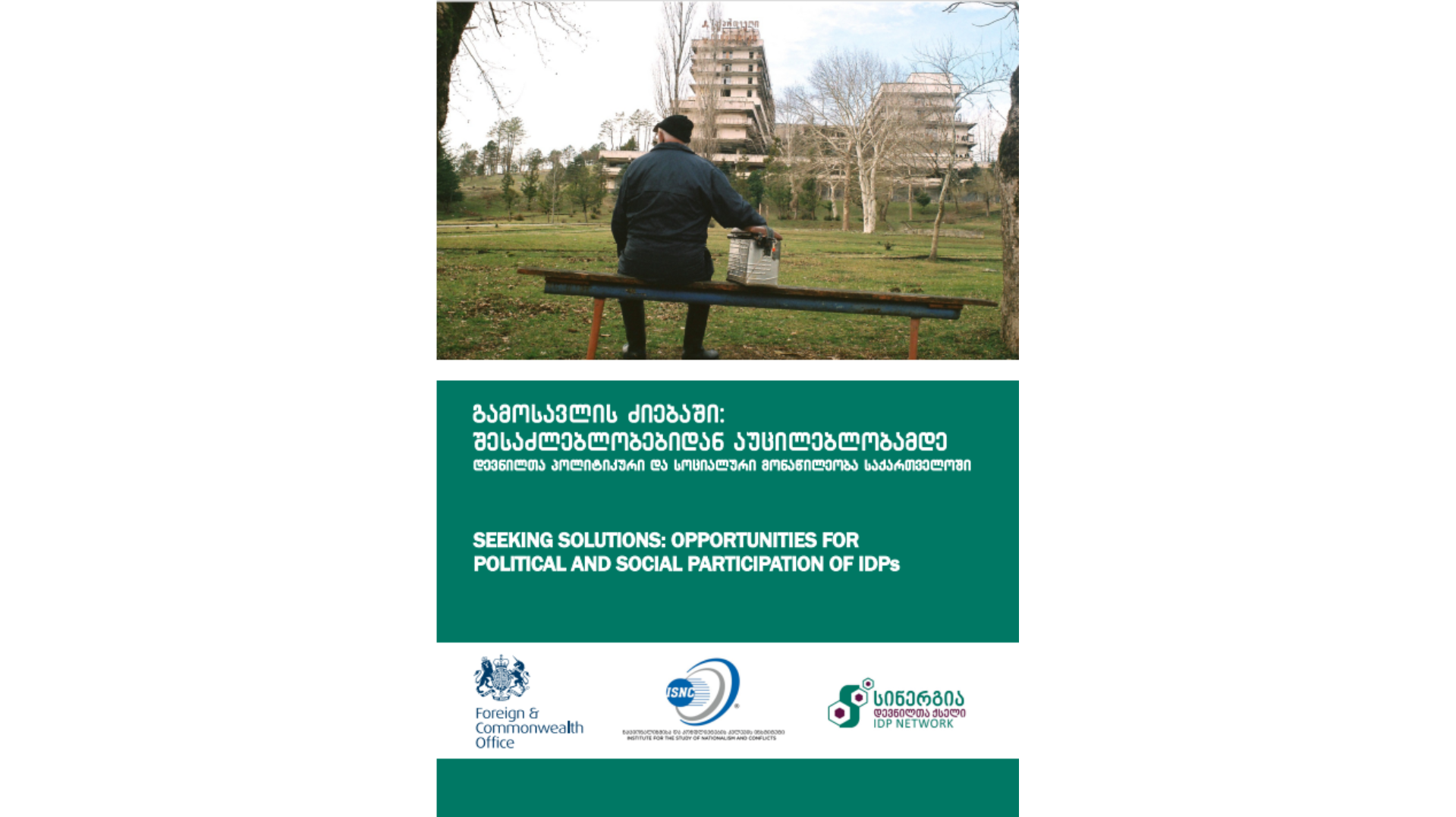
Since the restoration of Georgia’s independence, separatism and the conflicts it generated have been among the most traumatic experiences for the country. As a result of these conflicts, nearly one-fifth of Georgia’s territory remains outside the control of the central government, while hundreds of thousands of citizens—predominantly ethnic Georgians from Abkhazia and South Ossetia/Tskhinvali region—became internally displaced persons (IDPs). Over more than two decades of displacement, these individuals have endured poverty, stress, stigma, and deprivation. During the chaotic early years of statehood, the young Georgian state was unable to do much to assist them.
The stigma and dependence on humanitarian aid have long been left behind. Today, IDPs are significantly more integrated and self-reliant, and the state’s policies have also become more effective. Through the ongoing resettlement program—despite its shortcomings—the government’s care for displaced citizens has become more dignified and long-term. Yet, beyond transferring property rights, the state currently does little to ensure that IDPs become socially integrated and civically active members of Georgian society. In a democratic system, however, such civic and political engagement is essential for improving one’s living conditions and protecting one’s rights and interests.
This study seeks to examine the needs, opportunities, and challenges of IDPs’ social and political participation from their own perspective, in order to inform the development of more effective policies and interventions. At present, there is limited research and analysis available on the social and political engagement of displaced persons. Therefore, it is hoped that this report will be useful to state institutions, donor organizations, and the IDP community itself, particularly its active members, by helping them better recognize existing opportunities and pathways for inclusion.


